
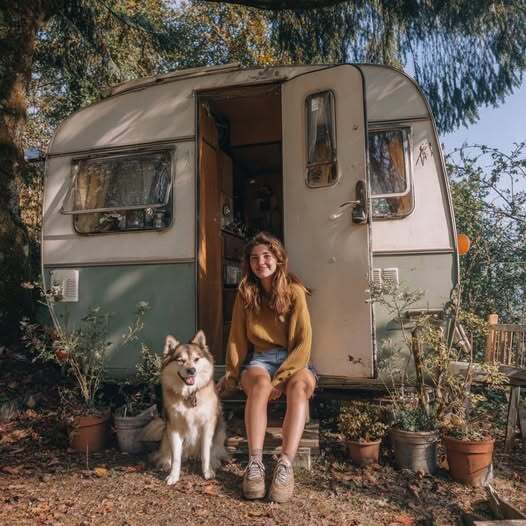
Instead of replacing everything, Ellie chose to reuse and reimagine. Old wood became shelving. Thrift-store fabric turned into handmade curtains. Dark, outdated tones were replaced with soft pastels that made the tiny space feel open and alive. Every detail reflected intention, not excess.
Slowly, the transformation happened.
What was once dim and forgotten became warm and inviting. String lights glowed softly at night. Vintage décor honored the camper’s roots while giving it new energy. Cozy corners invited rest, creativity, and quiet pride. The camper didn’t just look new—it felt loved.
The total cost of the entire project stayed under $1,000.
When Ellie shared photos of the transformation online, the response exploded. Thousands of people were drawn not just to the visual makeover, but to what it represented. They didn’t see a camper. They saw courage, creativity, and proof that meaningful creation doesn’t require permission, age, or wealth.
But the real transformation wasn’t structural.
It was personal.
Through the process, Ellie discovered confidence she didn’t know she had. She learned patience. Problem-solving. Self-trust. She proved to herself that she didn’t have to wait to be older—or richer—to build something worthwhile.
That camper became a symbol of something bigger: the idea that restoration is powerful, whether it’s an object, a dream, or a person. In a culture that discards what looks worn, Ellie chose to repair. In a world that chases newness, she chose care.
Today, when she sits inside her pastel-colored sanctuary, she isn’t just enjoying a renovated camper. She’s sitting inside the evidence of her own capability.
Ellie Yeater didn’t just restore a $200 caravan.
She rebuilt belief—in creativity, resilience, and the e
